
As a family-run, multi-generation timber business, the process is built around doing things the right way and respecting the land at every step.
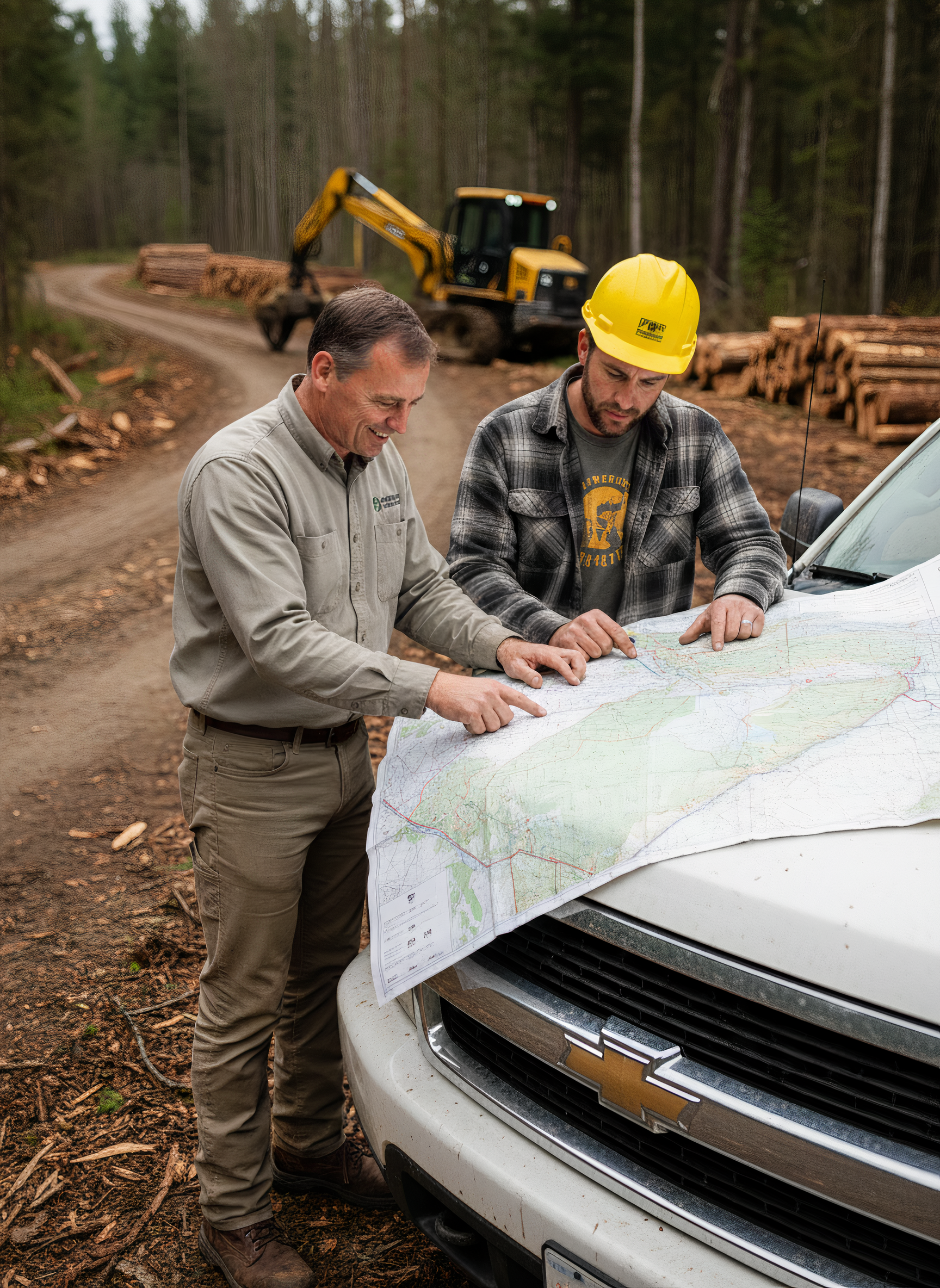
Each project begins with an on-site evaluation to review timber type, tract size, access, and the landowner’s goals. This allows the most appropriate harvesting approach to be identified before any work begins.
Registered foresters are involved to ensure the sale and harvesting process is handled responsibly and efficiently. Planning, pricing, and scheduling are clearly communicated so landowners understand what to expect from start to finish.
Timber Services
in North Carolina | Frontier Timber, Inc.
Timber may be purchased directly, or harvesting can be coordinated to support future land use, regeneration, and long-term land stewardship. The focus throughout the process is simplicity, transparency, and care for the property from the initial evaluation through the final harvest.
See Our Timber Harvesting Options >
Timber Harvesting
Options in
North Carolina
-
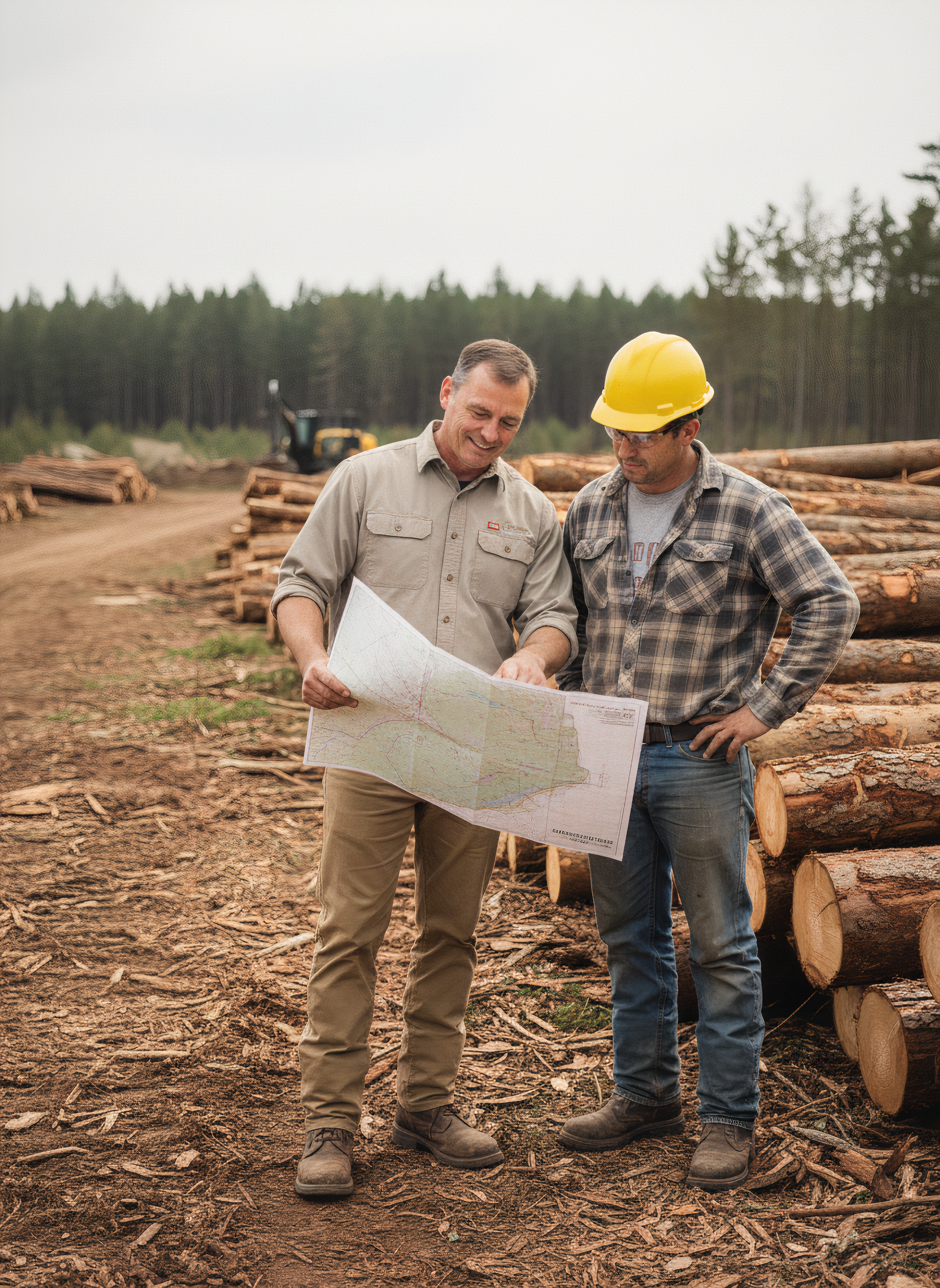
Clear-cutting is used when a timber stand has reached maturity or when landowners are preparing the property for future use. This method involves harvesting all merchantable timber within a designated area, allowing for efficient removal and creating opportunities for regeneration or land development. Clear-cutting is carefully planned to ensure proper access, minimize impact to surrounding areas, and support long-term land goals.
-
Thinning removes selected trees to improve overall forest health and encourage stronger growth among remaining timber. By reducing overcrowding, thinning allows healthier trees to receive more sunlight, nutrients, and space to mature. This method is often used to increase the long-term value of a timber stand while maintaining continuous forest cover.
-
Select cutting focuses on the removal of specific trees while preserving the overall structure of the forest. This approach is ideal for landowners who want to maintain a natural landscape while harvesting timber gradually over time. Select cutting promotes sustainability, supports forest regeneration, and helps maintain the long-term productivity of the land.